
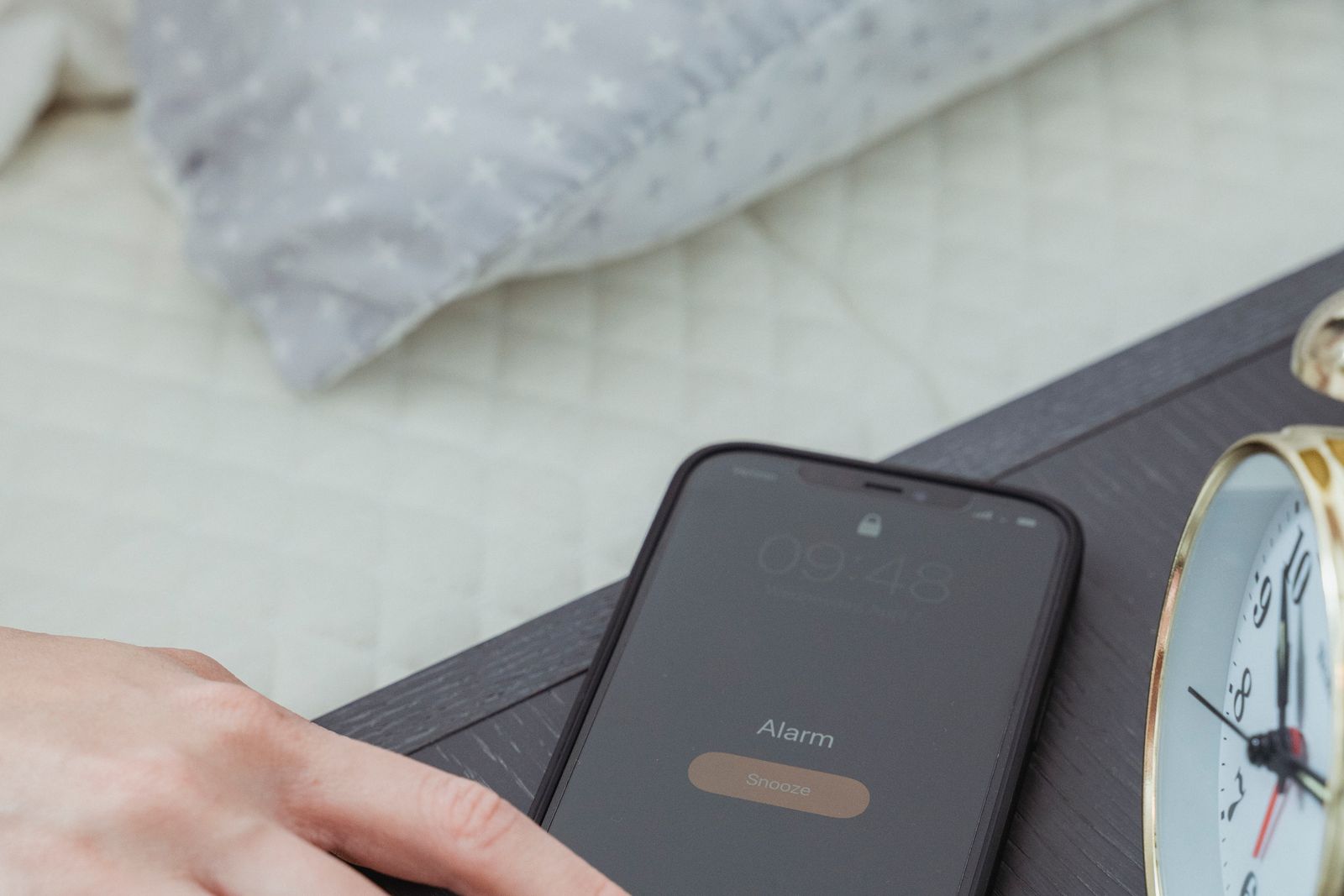
The appointment was at 3:00. The reminder went off at 3:00. You were somewhere in the house, doing something reasonable, and by the time you surfaced it was 3:20 and the clinic charges for no-shows. The cruelest part of ADHD reminders is that you did everything right. You anticipated, you set the alert, you delegated to the machine. The machine spoke, and your brain, busy elsewhere, filed the sound under “later.” Later never files back.
Why a correct reminder still fails
For years I assumed missed reminders meant I needed louder ones. What I actually needed was to understand three specific ways the standard reminder collides with an ADHD brain, because each one has a different fix.
Time blindness eats the runway
People who study time perception in ADHD describe something most of us know from the inside: the future comes in two flavors, now and not now. An appointment at 3:00 is “not now” all day, right up until it’s “now,” which is to say, too late. A single alert at the event’s start time lands exactly on the boundary, when the transition it was supposed to protect has already been lost.
The alert arrives without instructions
A reminder that says “Dentist” assumes the hard part is knowing about the dentist. The hard part is switching: saving what you’re doing, finding shoes, remembering where the office is. A vague reminder hands your brain a decision to make at the worst possible moment, mid-task, and ADHD brains respond to mid-task decisions by postponing them.
Habituation turns alerts into wallpaper
The same sound, the same banner, the same phrasing, day after day, and your brain does what brains do with any repeated stimulus: it stops rendering it. This isn’t laziness or carelessness, it’s filtering, the same mechanism that lets you stop hearing the refrigerator. The reminder still fires. It just fires into the part of your attention that no longer exists.
The fix, part one: remind in chains, not in points
The single most effective change I ever made was to stop treating a reminder as one moment and start treating it as a short sequence. The idea shows up across ADHD coaching and it maps beautifully onto the now/not-now problem, because each link catches a different phase of the transition.
- The evening before: a soft anchor. “Tomorrow has a 3:00 in it.” This plants the event in the day’s mental map, so tomorrow’s brain isn’t ambushed.
- One hour before: the workhorse. Close enough to feel real, far enough to finish what you’re doing, eat something, find the shoes. If I could keep only one link, it’s this one.
- At go time: the backstop, for the days hyperfocus swallowed the hour anyway.
Set them all at once, the moment the appointment enters your life, because future-you will not be adding alarms later, future-you will be busy. Three touches sounds like a lot until you compare it with the cost of one missed appointment, in money, in rescheduling, in the small shame spiral that eats the afternoon. Chains are cheap. Reconstruction is expensive, a theme I keep coming back to in what forgetting really costs.
The fix, part two: name the thing
Timing gets the reminder seen. Wording decides whether anything happens next, and this is where most systems quietly lose the game. Compare two phone buzzes. One says “3 tasks due today.” The other says “Neurologist 3:00 · Call the school about the meeting.” The first is a statistic, and you cannot act on a statistic, so you swipe it away with a vague intention to check later. The second is a picture of your afternoon. Your brain can grab it, weigh it, start moving.
The rule: a reminder should contain the actual next action, specific enough that no decision is needed on arrival. Not “insurance,” but “call insurance, ask about the renewal date.” When I capture things by voice I try to say them that way from the start, verb first, so the future reminder inherits the instruction. My past self does the thinking, my future self just obeys, and honestly my future self prefers it that way.
The fix, part three: fight habituation on purpose
Any alert you see daily is dissolving. Plan for it the way you’d plan for any predictable decay.
- Vary the wording. If your daily summary greets you the same way every morning, it will be invisible by the third week. Rotating even the title keeps it novel enough to render.
- Vary the channel for what matters. Critical things deserve a second modality: the phone buzz plus the sticky note on the door, or plus a person. Redundancy isn’t overkill, it’s ADHD-grade engineering.
- Audit monthly. Once a month, ask one question: which reminder did I stop seeing? Delete it or reshape it. A reminder you’ve habituated to is worse than none, because it gives false coverage.
Recurring things need a different trick
Daily medication, the weekly bin night, watering the one plant you’re determined to keep alive. Chains are overkill here, and pure phone alerts habituate fastest of all on daily repeats. What works for recurring things is anchoring: tie the action physically to something you already do without fail. The pill organizer lives touching the toothbrush, so brushing becomes the reminder. The bin bag waits against the front door, so leaving becomes the reminder.
The phone still earns its keep as the backstop, one alert, late enough to matter, worded as a question: “Did the pills happen today?” Questions age better than commands on repeat, I have no study for that, only years of muting commands and answering questions.
Fewer alarms, not more
Here’s the counterintuitive part. The chain-plus-naming approach works best when the total volume of alerts drops. Every notification you receive spends a little of your finite alert-attention. The 15 generic pings from apps you don’t care about are draining the exact resource your 3:00 appointment needs. Be ruthless: if a notification has never once changed what you did next, it’s noise, and noise is what taught your brain to ignore buzzing in the first place. Guard the channel like it’s a scarce thing, because it is.
What this looks like when a tool does it for you
Everything above can be done by hand with alarms, and I did it by hand for years, which is why I built the automatic version into Hilumly. When you speak a note, it extracts the commitments with their dates on its own, so the reminder inherits your words without a manual step. The morning summary names your day concretely, first appointment with its time, top task by name, instead of counting them, and it rotates how it greets you so it never becomes wallpaper. An hour before an appointment, it taps your shoulder: “In 1 hour: neurologist (3:00).” The chain, the naming and the anti-habituation, running quietly, with zero setup on your side.
The deeper reason it works has less to do with notifications than with where they come from. Reminders extracted from your own captured life stay connected to their context, on the thread of their topic, so when the alert fires you can open the whole story behind it in one tap. I explain that structure in how threads help you pick up where you left off, and the capture half in why loose voice notes aren’t enough.
Reminders that speak your language
Say it once. Hilumly turns it into a dated task, names it in your daily summary, and nudges you an hour before appointments. Built for brains that live in now and not-now.
Try it freeRebuild your reminders in 20 minutes
Tonight, if you have the bandwidth, run this once. It pays for itself the first week.
- Minutes 0–5: open your notification settings and silence every app that has never changed your behavior. Aim to cut the daily noise in half. This step powers all the others.
- Minutes 5–10: find your recurring failure, the appointment type or task you miss most. Give it a chain: evening before, one hour before, at time.
- Minutes 10–15: rewrite your existing reminders so each one starts with a verb and contains its own instructions. “Gym” becomes “pack gym bag, leave at 6:10.”
- Minutes 15–20: put one recurring reminder in your calendar for a month from now: “Which alerts did I stop seeing?” That single audit keeps the whole system alive.
You’ve probably been told, or told yourself, that you just need to pay more attention. You’ve been paying attention your whole life, at full volume, to everything at once. A reminder system built for your brain is simply the alarm clock learning to speak your language at last, and you deserve to be spoken to in it.